About Me

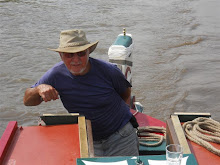
My photo
After thirty years of hiring, I finally bought my own 50ft boat in 2005, which was built in 2001 by Andicraft at Debdale Wharf. I mostly cruise single handed and have no problem with that, although it does take a little longer than with a crew. My mooring is on the Wey Navigation, so I have a choice of routes on the Wey or the Thames.

Sunday, 18 August 2013

Diesel Tank Purge

 For the last few years, I have been thinking about diesel polishing ever since reading about it in Waterways World, but at a cost of about £100, is it really that effective? For some time now a friend keeps asking if I have purged my diesel tank yet - to which the answer is no - that is, up till now.

Last week I decided to see what was at the bottom of the tank and what a surprise was in store!

This was the amount of sediment in a 2 litre container, which took a week to settle. When first pumped out, there was no sediment, the fluid just looked cloudy. Just think how much muck is there in a 200 litre tank after twelve years from new.

So far, I have pumped out 8 litres and the results are the same in all samples. The question is, do I continue to take out more, or just leave it and let the filters do their job? I could take out more if I got some more containers, but it's going to take an awful long time.

Thursday, 15 August 2013

Summer Coal Run 2013.


Summer Coal Run 2013


Nuneaton and Brighton had been loaded at Awbridge, on the Staffs and Worcester Canal, with mixed fuels on 18/19th July and had been on the move since then with Peter Clutterbuck as captain and Linda as the only crew member.


Day 1.

John, Trevor and I were due to meet them for a crew change at Braunston, but they only managed to get as far as Rugby, four hours short of their goal. Good progress though, considering they were only two handed. Trevor managed to find a point where the road ran parallel to the cut, so the change over went smoothly, before he took Linda and Peter to the station.

We were travelling singled out as always when loaded, with the butty about 70ft behind the motor on the snubber. Loaded boats travel this way so that they can move faster through the water and the long line allows the butty to move as if it is an independent  boat. This also stops the butty impeding the wash and propulsion of the motor, thus faster speed.

Some butty steerers prefer an even longer snubber – up to 100ft, making the butty even easier to steer. The problem here is that the motor steerer has all this extra line to pull in when breasting up in a double lock or mooring, making more work and increasing the chances of tangling the line around the propeller.
John attempts to clear the blades, while Trevor advises.

I passed by the old Gabriel, which was owned by James and Hazel and I managed to exchange a few words with the new owners. They must have changed the name, as "Gabriel " was not evident.

As before on the Barby Straight, we were run into by another boat and we were on a straight section! Two ladies with wine to hand, just pushed the tiller the wrong way and hit the motor. And it was a private boat, not a hire boat as before.

We made Braunston in 4 hrs as expected and as usual in the summer, Braunston moorings were chock a block, but we found one just above two locks, which was even closer to The Admiral Nelson. Nick Strivens was walking his dog along the towpath and stopped for a chat, after which he was invited to the Nelson later, where we repaired after a meal on board.

The pub has had a see-saw existence over the past few years, with several landlords under the same brewery, but the freehold has since been bought privately and custom seems to be on the increase, mostly from outside the village. Long may it continue, as it is one of the star pubs on the cut.

The Admiral Nelson. (photo by John Stevens)


Day 2.

Saturday was to be another hot day and we were off at 8am, as normal. Progress was good until we reached the Buckby flight, where the pounds were at their usual low level. Not only did the pair get grounded in the middle of a pound, but the butty ‘ellum came off as well. It was expected of me to demonstrate the means of replacement using the scaffold plank and pull-lift, but the plank was too short and also split at one end, so that was not possible and we had to resort to the original method of levering the ‘ellum up with a long shaft and lock gate as a fulcrum. Fortunately, this was achieved in record time and we were soon on our way again.

I passed Derwent 6 with Del and Al on board and there was much waving and jumping up and down by Al on the bow, when she realised who I was. Not only are they fellow bloggers, but they have an Axiom propeller and gave me a lot of advice before I bought mine. We shall meet up one day.

Through Blisworth tunnel was Stoke Bruerne, our goal for today, which was sunny and hot, but at the exit to Blisworth Tunnel, the heavens opened and we were mooring up in a thunderstorm outside the museum on nb Sculptor’s normal  mooring, as she was down at Linslade for the weekend.
On Sculptor's mooring.
All this was possible, because Kathryn Dodington had recently bought a waterfront house in the village and was privy to all the local news. She later gave me a tour though her newly restored cottage and I have to say that an excellent job has been done to make it cosy and very habitable. I was very impressed with the kitchen, in the basement, having seen it in April when the builders were there.
Stoke Bruerne.
We all assembled in front bar of The Boat later for a meal. This pub is featured  the 1945 film “Painted Boats”, http://en.wikipedia.org/wiki/Painted_Boats   but only the outside of the pub is shown and all the bar scenes were shot in a studio. I have since discovered that George Smith (first husband of Sonia Rolt) appears in one of these bar scenes and Henry Monk is shown pumping the bellows in the forge at Nurser’s Yard. Megs Jenkins plays a barmaid at The Boat and Harry Fowler is the young lad. Jenny Laird, the romantic lead, appeared in another six films after this, but she was not so profuse an actor as Jenkins and Fowler.
The Boat Inn.
Day 3.

We were down Stoke Locks the following morning in short order, before the long pound to Cosgrove lock and another very long pound through Milton Keynes. Somewhere on this stretch I happened to pass the Wilsons and the Wardlaws, from the Byfleet Boat Club, on their boats.  Unfortunately for them, I had to ask Rodney to stop the other side of a bridge ‘ole, much to his annoyance, in my usual manner of holding up crossed hands, indicating them to stop, so that I could come through first. Rodney wanted to know why we were ‘longlining’, as he called it, when we should be on cross straps, which means that he does not know as much about working boats as he makes out. Cross straps are used only when towing empty and the butty is higher out of the water, so it does not impede the propulsion of the motor.
Towing on the Snubber, (photo John Stevens)

Reeling in the snubber as the butty enters the lock.
(photo John Stevens)

This technique approaching a bridge ‘ole may sound like bad etiquette, but a single boat is far more manoeuvrable and can stop very quickly. To try and stop a singled out pair takes a long time and is only possible by slowing down very gently, so allowing the butty to gradually come to a halt as it has no means of braking. Alternatively, the motor reverses hard, the steerer quickly coils in the snubber and hopes that the butty steerer can hit the stern fenders of the motor and bring the butty to a sudden stop. If the butty slides past the motor, chaos results and one, or even both boats will be on the mud, which can take up to an hour to clear, thus blocking the cut, not only for the oncoming boat, but any other boat in either direction.

On a long straight section with an oncoming  boat approaching a bridge ‘ole, the motor steerer needs to judge who is going to get there first and has time to slow down to allow the other boat through first.  Whichever of these manoeuvres is taking place, the motor steerer has to pay particular attention to the snubber. If it gets caught around the propeller, the pair are disabled and it is the motor steerer’s job to get in the water and cut it free, as there is no weed hatch on these boats; not a pleasant task at the best of times, but also hazardous without proper precautions.

At one point we were following a wide beam boat, which took up a whole lock of course, so things were slow until he moored up below a swing bridge. I was lock wheeling, so opened the bridge for the pair, but the widebeam suddenly shot off his mooring and came through first, much to the annoyance of all. However, at the next lock he moored up at the back of the lock landing and we cruised past, asking if we could take the lock first. I think he was feeling a little guilty, because he agreed and we were now ahead.

Close to Soulbury, we came up behind another wide beam boat with a crew of thousands by their appearance at locks. No one seemed to know what they were doing, with kids everywhere. Trevor went to help with the Stoke Hammond Three and discovered that the man in charge had just picked up this brand new boat and only been on board an hour, with no previous experience. Trevor gave him some advice and they moored at the top of the locks in prime position, whereas we had a shallow mooring further on.
Approaching Stoke Hammond Three.

Ready for a pint Ship Mates?

Our Captain ponders the answer!

Still dreaming of that pint!

Later, when we were in the pub, the widebeam owner came over and bought us all a round of drinks in thanks for all the advice. That’s a first for me! He was invited to sit at our table of course and the conversation became very boat orientated.
The Three Locks was the first pub I stopped at way back in 1979 on my first ever hire boat. It has improved a lot since then.

Day 4.

The following day, we had a brief stop at Leighton Buzzard to shop and water up, before tackling Grove, Church and Slapton locks. Trevor got grounded in the middle of the cut below Grove, so we bow hauled the butty into the lock and shared with a private boat, whilst Trevor struggled to get afloat.
Who got us into this mess?

All went well to Maffers (Marsworth), where I decided to remain breasted up the whole flight. Luckily there were very few boats moored up at the bottom of the flight and all went well.
Round the bends at Maffers. (photo John Stevens)
We did single out across the long wooded summit and eventually moored at Cowroast, where we made off to The Cowroast pub for a Thai meal, only to find that they did not do food on Monday! However, we could have a take away delivered to the pub and could eat it there – brilliant!

Day 5.

 Alan Cummins joined us the next day and did his share of lock wheeling and steering the butty.
Alan enjoys steering the butty.
 Ian Johnson also joined us at Berko (Berkhamsted). All went well and then we approached the Cassiobury Bends. John decided to steer the motor and I was on the butty, with full instructions about steering right behind him, but now on a snatcher, which is shorter than the snubber. John’s route was right on the outside of the longest bend and through the weeping willow tree, which nearly took everything off the cabin top. Some of those hanging fronds have half inch thick stems!
Cassiobury Bends (photo John Stevens)
All went well and into Cassiobury Park Locks, with a very short pound between, which is often very shallow and really impeded progress.

We moored well above Cassiobury lock, having been forewarned that there were no moorings to be had close to the water point.  After a meal on board, we walked to the most dire pub on the whole trip, thanks to our captain. No hand pumps, so only eurofizz on offer. We ended up drinking San Miguel in this enormous pub, which was virtually empty, which says it all!

Day 6.

We were delighted to see Fabian Hiscock on his bike the next morning. We still had a puncture in one tyre on the boat bike that no one seemed to be able to fix. Lock wheeling with a bike is the fastest way to travel through a flight of locks and Fabian did them all that day, mostly in the rain! It was all going so well until Lot Mead lock, where we got talking to the lady at Lot Mead Cottage. On leaving the empty lock, I could hear something hitting the uxter plate as the prop was turning. John had a go with the cabin shaft in the lock, but the shaft got stuck under the motor stern. We bow hauled the pair out to moor on the bank, but the shaft was still firmly held by the obstruction. There was no alternative, but to go in the water and ‘take a look’. The problem was who? Eventually, Trevor made the decision and rigged a safety ladder so as to go groping around the blades.
I can feel something there.

Where are the wire cutters?
"Look what I found!"  (photo John Stevens)

Various ideas were proposed as to how to remove the 5mm spring wire wrapped around the prop and what type of cutters were to be utilised, before Trevor removed the offending keep net with his hands. Jubilation by all and all hail to the hero. Better still the lady in the cottage offered him a shower.
"Please Missus, can I have a shower?"
(photo John Stevens)

We were on our way again after an hour and did the Hanwell Flight without a hitch after a long day.
Breasted up on the Hanwell flight. (photo John Stevens)
Mooring just below the outlet of the river, we made off for The Fox, which is a pub I had not visited before and what a gem it is. Ian, who is a CAMRA fanatic even stayed on to make the pilgrimage there, before his partner Janet arrived to take him home. We ate and drank like kings, which was to be our last time together as a crew this trip.

Day 7.

Only two hours and two locks now to Brentford, where Trevor and John departed by train. When I returned to the boats, which were moored back by the railway bridge, I found that two boats had since moved from a prime spot close to the sanitary station and could I move the pair onto that mooring? Having thought it all through, I made the decision to move the breasted pair on my own, hoping that no one else would take up the prized mooring in the meantime. I was aware that no boats would come through off the Thames, as the lock below would be closed until the next tide. Fortunately, there was no wind to make things difficult and all went well.
Brentford in 2006. Note all the mooring spaces!
I was now alone until the new crew arrived the next afternoon and wondered how I was going to fill my time. I need not have worried as the first priority was a shower of course, then washing some clothes, filling the water containers, emptying the loos and some shopping, which seemed to take up most of the rest of day. Then there are all the people who stop by for a chat about working boats, one of whom was a guy called Ken Mullins, an ex BW lock keeper at Farmer’s Bridge locks in Birmingham and who also worked a pair of boats for Willow Wren briefly. His boat was 40yrs old and he proudly told me that he built it himself in his back garden. The engine room was a delight to the eye, with three engines in there, two of them being a pump and a generator. A stern gland grease pump was run off the propeller shaft by a belt around the shaft itself and pulleys to gear it down to a slow moving oscillating pump  -  an incredible piece of Rowland Emmet engineering.

I visited The Waterman’s Arms later, which is a Greedy King pub and can’t say that it was really worth a visit. On the way back I almost passed by Fat Boys Thai restaurant, where I had eaten well the last time in Brentford, so I thought it was time for another meal there. It was a hot and sticky evening, so all the front was open to the pavement. I sat at a table on front of the cooling breeze from the fan and had an excellent Phad Thai and glass of wine, before moving on to O’Brians fronting the dock. I got chatting to a couple of guys about the Grand Union canal, who delighted in telling me tales of their youth up and down the cut. A band had set up in the meantime and that put an end to all conversation, so I sat in a corner and enjoyed the music and beer. Despite my earlier misgivings, the day had sped by in a flash.

Day 8.

Another warm and sunny day greeted me and it was time to visit MSO Marine, who I had been in contact with earlier to see about having my own boat blacked. What an interesting place it turned out to be and how pleasant were Pauline and Jake in the office, where we chatted about the Narrowboat Trust. Eventually, after much chat, I managed to get an estimate for blacking and epoxy coating out of Jake, with a slot in the floating dry dock in October. If they are chosen by David Suchet to work on his boat “Leonie”, then that is good enough recommendation for me. One proviso that Jake stipulated, was that I had to be there at a specific time at high water, so that they could sink the dry dock and float Stronghold in. I was very impressed with MSO Marine, who are obviously very professional and have more than adequate equipment to do the job. Not cheap by any means, but you get what you pay for.............I hope! Watch this space.

About 2pm, Barry arrived with the new crew of Katina White and Ian Morrison. Another visit to Morrisons was in order to stock up for the next few days, before Barry did the evening meal. We went for a walk afterwards to pay a visit to The Brewery Tap, in Catherine Wheel Road, where I had had such an enjoyable musical evening last October. Once again, there was music on and I recognised a few of the performers from the previous visit, but we wanted to talk and quiz the newer members, so we sat out the back under a shelter during a thunderstorm. I can definitely recommend this pub as being the best for me in Brentford. It seems to be populated by locals, who all seem to know each other and offer a warm welcome to strangers in their midst. I suspect that some of them are residential boaters moored on the adjacent Town Wharf and possibly new customers.

Day 9.

On Saturday, we were due out through Thames Lock at midday to catch the rising tide up to Teddington, but we had this new delivery to MSO Marine to make as soon as we were through the lock. Unfortunately, the motor rudder came unshipped in the gauging lock, even though I was well away from the cill, so there must have been and obstruction on the bottom. We made it to the pontoon outside and heaved up the tiller, until it finally engaged in the skeg. All the time, I had a eye on the water level at Town Bridge, because if it gets too high, there is no passage beneath.

We moored for the night on the lock lay-by below Molesey lock, as there was a delivery of 30 bags via John’s car to a house about half a mile away. Then it was time to visit The Albion to eat. This is my fave pub in the area when I moor here. Always a good selection of beers and good value food, so it is always busy.

Day 10.

It was Ash Island day –  which takes up most of the day to unload. Several of the islanders come out to help in their vested interest, so it is usually a very sociable occasion. The boats are moored up on the slipway, so a lot of bags have to be shifted from the stern end to unload close to the bow. Very hard work, so I do whatever I can manage without straining myself. We ended the drop with a visit to the houseboat just above the weir, where we were finally entertained on the sundeck above.

Barry aimed to stop for the night at The Weir, though I was doubtful whether there would be a mooring space. Fortunately, it was unoccupied and we had a pleasant evening in the pub.
Beer at The Weir.
Ian, Katina, Barry, Ray.

Day 11.

My bags were packed the following morning before we even moved off, as I was due to jump ship just below Shepperton Lock along with Ian, who had a job interview in London the following day. The plan was to take our bags to Thames Lock on the Wey Navigation, leave them in the office and walk a mile and a half to my car, before returning to collect the bags and then take Ian to the station. As luck would have it, there was a boat in the lock, ready to sail off in the same direction and even better luck followed as I knew who owned it. Ken Mullins, whom I talked to at Brentford, was in the office and recognised me, so we blagged a lift to The Pelican on the 40 year old boat that he built in his back garden.

So, it was another eventful and enjoyable trip on the loaded boats, with a very compatible crew, working well as a team – brilliant!


Friday, 5 July 2013

Header Tank Repair.


Barry took the header tank to his welder after cleaning it up further and finding two more holes.
 
The bottom of the tank was paper thin in places and this was cut away by the welder and a 6mm piece of  aluminium was welded in place, with a boss for a drain plug in addition and what an excellent job he made of it too. The tank was further cleaned out with descaler and the tubes cleaned out with an extended drill bit, before flushing out what was left.
 
(All photos by Barry Adams)
 
All that remains to be done now, is to bolt it back in place for the next trip to load up with coal for the NBT Summer Coal Run.
 

Braunston Historic Boat Rally 2013


I had visited this rally two years ago with the Narrow Boat Trust and had thoroughly enjoyed the occasion, even though we had a mooring next to the Elsan disposal point. This time, however, we were moored just above Butcher’s Bridge, between the two entrances to the Braunston Marina, which was much more salubrious and closer to the action.
Mooring just above Butcher's Bridge.

Barry and I arrived on Thursday before the event, as there was some work to be done on the boats, most of which was completed the following day. We booked in and had a chat with Graham Scothern, the harbourmaster.. We strolled around the marina and I happened to see Kevin and Ingrid from nb Columbia, who are live aboards, usually in the Thrupp area. I was introduced to them by a mutual friend in The Jolly Boatman at Thrupp a couple of years ago. At the same time, Jan and Frank appeared from their boat, Havoc II  in the marina, so they also stopped for a chat. I had met Jan on one of my Basingstoke adventures last year and was aware that they had a boat here. On the way back to the boats, I bumped into Geoff  Holman and found that he was staying on nb Crane with a mate. I had met Geoff last year, also on the Basingstoke on his boat Finch, where we did a few locks together. There is nothing like mutually doing locks, to make friends with other boaters. Suddenly, the whole atmosphere had become a very sociable occasion for me and I felt very much at home.

After a very good meal on board, we repaired to The Admiral Nelson.  I always get muddled with the name and sometimes call the pub The Lord Nelson, but as someone pointed out, he was only an admiral when the pub was built. We met up with Geoff and his captain and had a very pleasant evening.

Friday was a working day, but a gut buster breakfast (for Barry) was in order first at The Gongoozler, a floating restaurant by the marina entrance. After which, various tools were collected from the car to replace the cabin door lip on the motor, which had caught on a bridge ‘ole when trying to hold back the butty the weekend before. It was a case of another bridge that was too low for the butty, or was the butty too high for the bridges?   The prepared piece of iroko was screwed in place and given a coat of red oxide paint in the absence of any primer, but looked fine as it more or less matched the other paint on the door.

Cloths were partly removed from the butty and it was tidied up in readiness for visitors. I walked up to Braunston Chandlery to get a new cabin shaft and enjoyed browsing around the shop, as always. After a meal of lamb tagine, that I had cooked just for a change, we took another walk to The Admiral Nelson, just to make sure it was still open! This pub, although right on the canal at Lock 3, is very popular with boaters in the summer months, but does not attract much attention in the winter, as it is so far out of the village. In consequence, it frequently closes and then re-opens in the summer with a new landlord or tenant. I have to say that the present owners have done it proud with pleasant staff, well kept beer and attractive food. I wish them luck for the future.

Saturday dawned and the forecast for the weekend was promising. Very shortly, Steve Smith arrived with Jennifer, along with the Lapworth family, so in good old English tradition, tea was served to all. I should explain here that Alice Lapworth is an NBT member, who is part of a very well established boating family, being born on a narrow boat. Her brother-in-law Tom, has been a boater all his life and always self employed; his last venture being a tug owner, which did a lot of work on the Windsor Flood Relief Programme a few years ago. He was accompanied by his wife Maureen and Jeanette Smith-Harrison, who had brought along a very interesting collection of photographs of her boating ancestors. Colin Wilks, our newest member, was also welcomed on board. Colin has been with Friends of President, the steam narrow boat paired with Kildare and owned by the Black Country Living Museum. He thought it was time for a change and brought considerable experience of boating with him, which is very welcome, as well as being a beer drinker and  laughing at my jokes, so needless to say we all clicked immediately.

The boat parade was due to begin at 11am and we squeezed into a suitable space in the procession about 12 o’clock, with Tom Lapworth steering the motor and Alice steering the butty. As usual, progress was very slow and we were often at a standstill waiting for boats ahead to wind at Braunston Turn. Now I should explain that this turn is unique on the waterways, as it is formed by a triangular island in the centre of the junction with a foot bridge over the top. To turn (wind) the boat, you steer up one side of the triangle, then reverse down the other side, by which time the boat is facing back the way it came. Doing this on a single motor boat is not easy without hitting the sides, but completing the manoeuvre with a pair of boats on cross straps is a work of art. However, Tom and Alice demonstrated that art, born out of years of boat handling practice. What we all found incredible, was that Tom on the motor, could make the butty boat do whatever he wanted and to say that we were in awe of his expertise, is rather an understatement.

Alice Lapworth learns the ropes!

Tom waits for the off.


On the parade. (Photo by Barry Adams)
 
The parade took us 3 hours, which is par for the course, so we were back on the mooring by 3pm and spent the afternoon drinking tea and chatting to passers by, one of whom was Chris Iddon from nb Merchant, with his latest squeeze, Catherine or is that Katherine? We had met on a couple of occasions last year and I had heard about his new girl friend on the towpath telegraph, even down south, which he appeared rather surprised about. He is now only working weekends and his boat is moored at Staines-on-Thames, as it is now officially called! No doubt his fuel business will be full time again as winter approaches. You have to love the life to cope with selling fuel on the waterways, as there is no way you will make a fortune, just a living.


I was looking for photo opportunities under Butcher's Bridge, when someone pointed out a family of mink under the opposite bank. It appeared that the young were in the nest and making a lot of noise, but did not dare venture out. Sure enough, a little later, the parents returned swimming back to their hideout. As someone suggested, a 12 bore would put paid to all of them at the same time.
Back to the nest.


Back home.

Once again, we made tracks to the Nelson and met up with Jeanette again, as well as David Blagrove, another NBT member, who delights in telling tales of his past to a very attentive audience. Needless to say, a fine night was enjoyed by all.

David and myself on a previous run.

Another fine day on Sunday and this time we were on the 2pm parade. I was rather anxious to get away early, as there was a lot to be done before we went home and I was doing the driving. Consequently, we were first in the parade and completed it in an hour – unheard of! As before, Tom and Alice were steering and demonstrated to all how it can and should be done. There were less gongoozlers than on Saturday, which I found rather surprising – maybe Wimbledon was keeping them at home.

Approaching Braunston Turn.
 
Moving the butty over at the apex of the triangle.
 
Reversing back on to the main line.......
........and even further.........
.......until we can straighten up - job done!
(All Braunston Turn photos by Alan Cummins)

Back on the mooring, final cups of tea were drunk, before our visitors departed. Meanwhile, I went off to the marina to get something to eat and when I returned the header tank was on the towpath, much to my surprise, as this was the job that had to be done before Barry could take it home for repair.  There was much doubt amongst visiting boaters as to whether the casting could be welded, but Barry was optimistic after having a word with his tame welder. As can be seen below, it was possible even though the patch was larger than expected. Another header tank was available on the internet at £450, which is a great deal more than £60 for repair! We clothed up the butty to keep out any rain and drove off about 5.30pm – far earlier than I expected, but met up with all the traffic exiting from Silverstone, so detoured through Stoke Bruerne to the M1, which was also very busy, but we kept moving and I got back to my boat about 7.30pm after an exhausting, but very enjoyable weekend.

An excellent video by MrGig2010 can be seen here.


Thursday, 27 June 2013

An Eventful Journey


Once again, I was back on board Nuneaton and Brighton, to take the boats from Alvecote to Braunston for the Historic Narrowboat Rally the following weekend of 29th/30th June. With more than 80 restored boats to see, not only moored, but also in the daily parade, it is well worth a visit. http://www.braunstonmarina.co.uk/Events/HistoricBoatRally.aspx

Barry Adams and I arrived at Grendon Dry Dock, where the pair of boats were moored after their blacking the previous weekend. The butty had to be winded manually, before we could hitch it up to the motor to take it the 3 miles to Alvecote to fuel up and try to seal up a water leak somewhere in the header tank on the engine before the trip. The pair were on cross straps, as they were unloaded and we were on a narrow canal.

We stayed the night at Alvecote and ate at The Pretty Pigs in the village, which was excellent value for a carvery at £3.99 and beer at £2.50 ish! We returned to The Samuel Barlow, as Barry was driving and met up with Graham and Becky, who were new NBT members and lived on a boat in the marina.

The following morning, Barry and I took all the connecting pipes off the header tank, made new gaskets and sealed them with silicon, before bolting everything back in place. Because a lot of the brass fittings were corroded down to very narrow mating surfaces, leaks were still evident and it all had to be repeated with much more silicon smeared around the joints. That was an improvement, but water was still mysteriously weeping out somewhere below the tank. However, it was good enough to travel and time was limited.

Steve Smith and Ian Palmer arrived, so we took the pair of boats up to the refuelling point and filled the tanks, before winding them, still breasted, in the narrow marina entrance. "A lot of eyes are on you", said Barry as I gently turned them, stern first into the marina entrance so as to take full advantage of the northerly wind. All went well and congratulations were accepted gracefully from my peers. If you cock it up, no one says anything!

It was very windy and as we had not taken off the top cloths, the wind affected the pair considerably when out of the shelter of trees. It takes about an hour per boat to remove the top strings, remove and fold the cloths before retying the top strings again to hold the top planks in position. All this would have set back our progress on the water, as well as having to cloth up again when we we arrived at Braunston.

It did not seem long before we were at Atherstone bottom lock and were up the flight of eleven locks in short order, with myself steering the motor and Ian and Steve bowhauling and working the butty and Barry flitting between the two boats, although I was abandoned for the last three to cope on my own. Maybe they thought I was having too cushy a time, but being used to working all the locks when out on my own boat, it was not difficult. In fact, I get out of routine when I do have a crew and just get on the bank and help, when I don't really need to.

We eventually reached Anchor Bridge, between Atherstone and Nuneaton, with The Anchor pub close by, so we moored up for the night. Barry and the other two were cooking up a meal, so I took a torch and had a look for the weepy water leak, which I eventually discovered around a drain plug. Finding a spanner to fit, I tried to tighten it. Imagine my surprise when the drain plug and surrounding metal dropped into my hand, followed by a gush of water from the tank, where a ragged 1 inch diameter hole had appeared! It was own up time to Barry, as he was captain on this trip. As usual, he took it in his stride and had a look at the damage, saying that it was better to have happened now, rather than when we were in a hurry, or even out on the Thames with no convenient mooring. Between us, we soon had the tank off, despite the difficulty of hidden and inaccessible bolts. As there was silicon to hand, all we needed was something to cover and patch the hole, but what? A tin of fruit salad was opened and the crew were force fed, so that we could cut up the tin can with scissors to make a patch. Some cable was found and stripped as ties to go around the tank and the repair was complete. It was left to set off overnight, as we had yet to eat and get to the pub before before closing time, which we did with 40 mins to spare. The tank was refitted the following morning, refilled and there were no leaks!
Where is the drain plug?

Ah, there it is.

Repairs in hand.

Back in place.

The following day, the header tank had the cap removed, so as not to pressurize the cooling water and it all worked like magic, with not a drip in sight, although a close eye was kept on the engine performance There was the usual detritus under the bridges in Nuneaton, but no hold ups, as there can be when the pair are loaded. We did have a slight hold up later though, when following three other boats, who were travelling so slowly, that we caught up with them on tick-over. We squeezed past the first one, much to the surprise of the steerer, then the next one, which was a hire boat and he looked surprised too. The last boat pulled over to let us past and was cursing the creep at the back for being so slow. I think he must have had a problem getting past him earlier.

We were soon at Hawksbury Junction and I wanted to steer the motor around the 180 degree turn at Sutton Stop, having seen so many other boats make a mess of it. There was some discussion beforehand about which cross strap to remove on the turn, but as steerer, it was my decision and I removed the strap off the inside dolly as before. Whether this is correct, I am not sure, but it seemed to work for me. All went well and I got the motor around in one, without reversing. However, the butty scraped the inside of the turn, but that was down to the butty steerer! I was awarded 9/10 by the captain and I was rather chuffed as it was my first attempt. As always, when all goes well, there were no gongoozlers outside The Greyhound. It's like wetting yourself in a dark suit ....... you get a nice warm feeling, but nobody notices!
Slowly does it........

under the bridge..............

with the wick turned up............
butty steerer counter steering to push me round........

until home and dry. Where are the gongoozlers?
(All Sutton Stop photos by Barry Adams)

We continued on, without a stop at The Greyhound to celebrate, and were making good progress through Rugby and down the Barby Straight, when we approached a left hand bend, where a Union Canal Carriers hire boat was approaching in the opposite direction, with a group of pirates on board, obviously on a stag trip. They made no attempt at steering their boat and continued straight on, cutting across the canal and hitting Nuneaton with a resounding crash, pushing us even further into the bank than we already were, to try and avoid a collision. They all seemed to be speechless and no apologies were forthcoming as they continued on their merry way. Nuneaton's gunwhale had been pushed in by the impact by about 1 inch, although no internal damage was evident. It was fairly obvious to me, that the crew of the hire boat had probably taken over the boat at 3pm in Braunston, had about 40 minutes of basic instruction, before being let loose on their own, as they were approximately 1 hour out of Braunston at the time.

The indefatigable Captain.

On the lookout for pirates.
(Photo by Barry Adams)


We arrived at Braunston an hour later and found a breasted mooring for the pair. The crew packed bags and we set off for home, looking forward to good weather for the following weekend.


Wednesday, 19 June 2013

Etruria Canals Festival 8.

Oh dear, I had a bad night, up at 3am to go to the loo in the engine 'ole. Not a good experience, walking along the gunnel in PJ's, but with sandels on my feet, as there is a steel rung ladder to get down and bare feet is not an option! Then again at 6am - what's going on? I know it was a heavy session in The Star, but I'm rarely affected like this. After a cup of tea, about 7.30, I was sick - surely this was not a hangover? The last hangover I had was when I was about 21! "Self inflicted!" voiced the motley crew and I have to say I agreed, but not so it appeared, as the week wore on and the stomach upset continued until Friday, when the Co-Op diarrhoea tablets began to take control.

All this caused a feeling of debilitation and I can't say I was in top form winding paddles, so I had to have an occasional lie down to recoup some energy. Fortunately, we now had Graham back on board, as well as Dave Thompson for the day, so there were ample bodies to cope.

Approaching a bridge 'ole, a CRT work boat was moored the other side and very close to the bridge, which was going to be a tight squeeze for our pair. We had already removed the looby from the butty, knowing that bridges were extremely low close to Stoke. The work boat had moored there so that it was close to the vehicle for tools to do a repair on the boat, but there was ample room further back. The motor just got through, but the butty, being that little bit higher, caught the top cloths and strings on the bridge arch, so pushing all the top planks back by 3 inches. It was good that we had removed the looby, otherwise the box mast would have broken it's steel bracket yet again. With hindsight, I should have stopped and asked the CRT crew to move further back on their mooring. As we passed I suggested that they were too close to the bridge 'ole, to which they just laughed. Maybe a good bang on their bow would have made them realise their stupidity!

As we approached Fradley Top Lock, another boat was making an exit the other end, so the lock was against us. The motor was up to the top gates, with the butty on cross straps right behind. There was room for one boat only on the lock mooring, as there were moored boats immediately behind. On the outside, a permanently moored boat made the entrance very narrow, so I decided to refill the lock and take the motor through. Immediately I closed the bottom gates, there was hooting from a boat in the next lock, which was a good 400yds away, which I had already noted. As the lock was filling, a woman appeared, brandishing her windlass and in an obvious state of agitation, protesting that I had turned the lock against her boat. Now I can understand her frustration, as I have had it done to me on more than one occasion. Very politely, I pointed out the situation our boats were in and explained that if we tried to reverse out of the way, the pair would jack knife and block the cut, as well as possibly sustaining damage to other boats. I asked her what she would do in the under the circumstances, to which she had no answer, except that we were wasting water. Hardly relevant, as the water was running over the weirs. However, not to be outdone, she then said "The boat is going to hit the gate. The boat is going to hit the gate! THE BOAT IS GOING TO HIT THE GATE!!! WHAT DO YOU THINK IT IS
AN ICEBREAKER?"
Of course Barry touched the bottom gate with the bow, otherwise how does he know if the boat is right into the lock? At this point the man approached and started a rant, to which I replied "Sir, I have explained the situation to your wife," and then I walked away. As their boat entered the lock, I closed a bottom gate and they accepted my offer to draw one of the paddles, but only a little way on each one, so it was a slow process. No thoughts of holding the boat against the top gate on the engine and speeding things up then? It must have been a slow journey!

On Canal World Discussion Forum this posting appeared, which I presume was aimed at myself:-

 "Just go back from a fortnight cruise. Only one lock gate slammed in my face and the lock filled, and that was by a "working" boat who obviously didn't feel that the normal rules applied to him. Not a real working boat, I stress, just one of the heritage johnnies."

I did prepare a suitable reply, but the NBT chairman got in first, so it was not posted, but I publish it here anyway:-

Reply to Mrs Arsey

As the person responsible for making the concious decision to turn the lock against this boater, I would like to explain the reasons why.

1. The motor and butty (72ft each) were both empty and on cross straps, with bow in the head of the lock.

2. There was space for only one boat on the lock mooring.

3. Behind the lock mooring was a line of moored boats.

4. Another boat was moored on the opposite side to the lock mooring.

5. Reversing the pair to clear the head of the lock was not an option for the reasons 3 and 4 as well as the certainty of the butty jack knifing and the cut being blocked for a clear exit from the lock, which would delay all concerned and be a pointless exercise.

6. Had the boat owners been waiting below the lock and not 400yds away, to be asked if we could take the motor through before them, then we would have done so, if at all possible, as we have been doing on the rest of this trip. Needless to say, everyone, without exception, conceded to our former requests.

7. Just for you information, these boats carry 80 tonnes of coal each year.

And, by the way, my name is not "johnnie"!

Barry found this bye-law from BT:-

Operation of locks 25. No person shall:
(a) Open or close or attempt to open or close the gate of any lock
except by the means provided for that purpose or before the
water is level on both sides of the gate.
(b) Draw or operate any sluices until the lock-gates are closed.
(c) Operate or leave open any sluice so as to waste water.
(d) Operate any sluice otherwise than by means of the handle or
other device normally used for that purpose.
(e) Fill or empty any lock of water for the admission of any vessel
to the lock when there is another vessel approaching the lock
from the opposite direction and within two hundred yards thereof
and the level of the water in the lock is suitable for such
approaching vessel to enter the lock.


When the butty was picked up by the motor at the bottom of the lock, Graham had yet to get on board and the only option was on the butty, which is a difficult operation when the butty is stationary, let alone on the move, as it is so high out of the water when empty. He attempted to plant his bum on the back end beam, but did not quite make it and slid gracefully into the cut, though still hanging on to one of the side strings. Fortunately, his head did not go under, so he retained his hat and glasses. Barry slowed down further and pulled in close to a CRT work boat, by which time Graham had his feet on the bottom and could walk to it, where two hefty guys pulled him out, much to the amusement of all, except Graham of course. Luckily, he had a change of clothes with him, although his mobile got wet, but not enough to stop it working after a slow drying out.

Sadly, we passed by The Swan, aka The Mucky Duck at Fradley and made a clean turn on to the Coventry Canal, eventually reaching Alvecote for a meal and well deserved beers at The Samuel Barlow.

The following morning, the pair were moved to the dry dock at Grendon for blacking the hulls. This was to be a three day affair and there was only Barry and me left on board, although Setareh Campbell bravely made her first ever visit to the boats from Oxford to help. Rather a baptism of fire for her, as blacking is not one of the most delightful occupations in a dry dock that never is dry.

Despite wearing gloves, Barry had more black on his hands than I did!

The deeper skeg added to avoid the rudder being lifted.

The enlarged and greater pitched propeller.

The blacking began on Friday and three of us got one coat on. I turned up late on Saturday, after a puncture repair, only to find that there were five
people on the job, which was now complete, so job done. Sorry I was not there guys, but I have no guilty feelings and I can't help having a puncture!